
Easy Miso Soup Recipe – Authentic Japanese Flavor
Miso soup recipe: Ah, that comforting, umami-rich bowl of goodness that feels like a warm hug from the inside out. There’s a reason why miso soup is a staple in Japanese cuisine and a beloved starter across the globe. Its delicate yet profound flavor profile, characterized by the fermented soybean paste, offers a complex symphony for your taste buds. Beyond its deliciousness, miso soup is surprisingly versatile and incredibly healthy, packed with probiotics and essential nutrients. What truly makes this dish special is its simplicity and the ability to customize it to your heart’s content. Whether you’re craving a light appetizer or a satisfying side, a homemade miso soup recipe is your ticket to culinary bliss. Let’s dive into how you can recreate this magic in your own kitchen.
Why You’ll Love This Miso Soup Recipe
A Taste of Comfort and Tradition

Miso Soup Recipe
Miso soup is a comforting and deeply flavorful Japanese staple that’s surprisingly simple to make at home. Forget those instant packets; this homemade version is a world apart, offering a complex umami taste that warms you from the inside out. It’s incredibly versatile, serving as a light appetizer, a side dish, or even a light meal on its own. The beauty of miso soup lies in its adaptability. While this recipe provides a classic and delicious foundation, you can easily customize it with your favorite additions. The key is the dashi, the Japanese soup stock that forms the soul of the broth, and the miso paste, which lends its signature fermented depth. Let’s dive into creating this wonderfully satisfying soup.
Ingredients:
Instructions:
Preparing the Dashi and Seaweed
1. Begin extract by preparing your dashi. If you’re using instant dashi granules, simply follow the package instructions to make 2½ cups of broth. For those looking to make dashi from scratch using kombu (kelp) and katsuobushi (bonito flakes), this usually involves simmering the kombu in water until just before boiling, removing it, and then adding the katsuobushi to steep. Strain the resulting broth to create a clear, flavorful base. While the dashi is being prepared or is still warm, it’s time to rehydrate your dried seaweed. Place the heaping tablespoon of dried seaweed in a small bowl and cover it with warm water. Let it sit for about 5-10 minutes, or until it has softened and expanded. This will transform the dry, brittle seaweed into tender, flavorful strands. Once rehydrated, drain any excess water and set it aside. This seaweed adds a delightful chewy texture and a subtle oceanic flavor to the soup.
Combining the Base Flavors
2. In a medium saucepan, pour in your prepared 2½ cups of dashi. Gently heat the dashi over medium heat. We’re aiming to bring it to a simmer, not a rolling boil. A gentle simmer is crucial because we don’t want to overcook the delicate ingredients that will be added later. Once the dashi is warm and just begin extractning to steam, add your rehydrated dried seaweed to the pot. Stir it gently to distribute it throughout the broth. Allow the seaweed to heat through for a minute or two, infusing the dashi with its essence. This initial step is all about building a clean and savory foundation for our miso soup. The warmth of the dashi will further soften the seaweed and begin extract to meld its natural flavors with the broth.
Adding the Tofu
3. Now it’s time to introduce the silken tofu. Carefully add the small pieces of silken tofu to the simmering dashi. Silken tofu is wonderfully delicate, so it’s important to handle it gently to prevent it from breaking apart too much. You want those little cubes to retain their shape as much as possible, providing a creamy contrast to the broth and seaweed. Stir very gently to submerge the tofu pieces. Let the tofu heat through in the dashi for about 2-3 minutes. Again, we are not looking for a vigorous boil here. The goal is simply to warm the tofu so it’s pleasant to eat and to allow it to absorb some of the subtle flavors of the dashi. The silken texture of the tofu will melt in your mouth, adding a wonderful mouthfeel to the soup.
Incorporating the Miso Paste
4. This is arguably the most critical step in making authentic miso soup, and it requires a bit of technique. Miso paste is a live culture and should never be boiled vigorously, as this can destroy its beneficial probiotics and alter its delicate flavor. So, before you add the miso, reduce the heat to low, or even turn it off temporarily if your stove retains heat well. Take about 2-3 tablespoons of your chosen miso paste (white, red, or a blend – experiment to find your favorite!) and place it in a small bowl or a ladle. Add a small amount of the warm dashi from the saucepan to the miso paste. Whisk or stir this mixture vigorously until the miso paste is completely dissolved and forms a smooth liquid. This process, called “tempering” the miso, ensures it integrates seamlessly into the soup without clumping and preserves its nuanced flavor.
Finishing and Serving
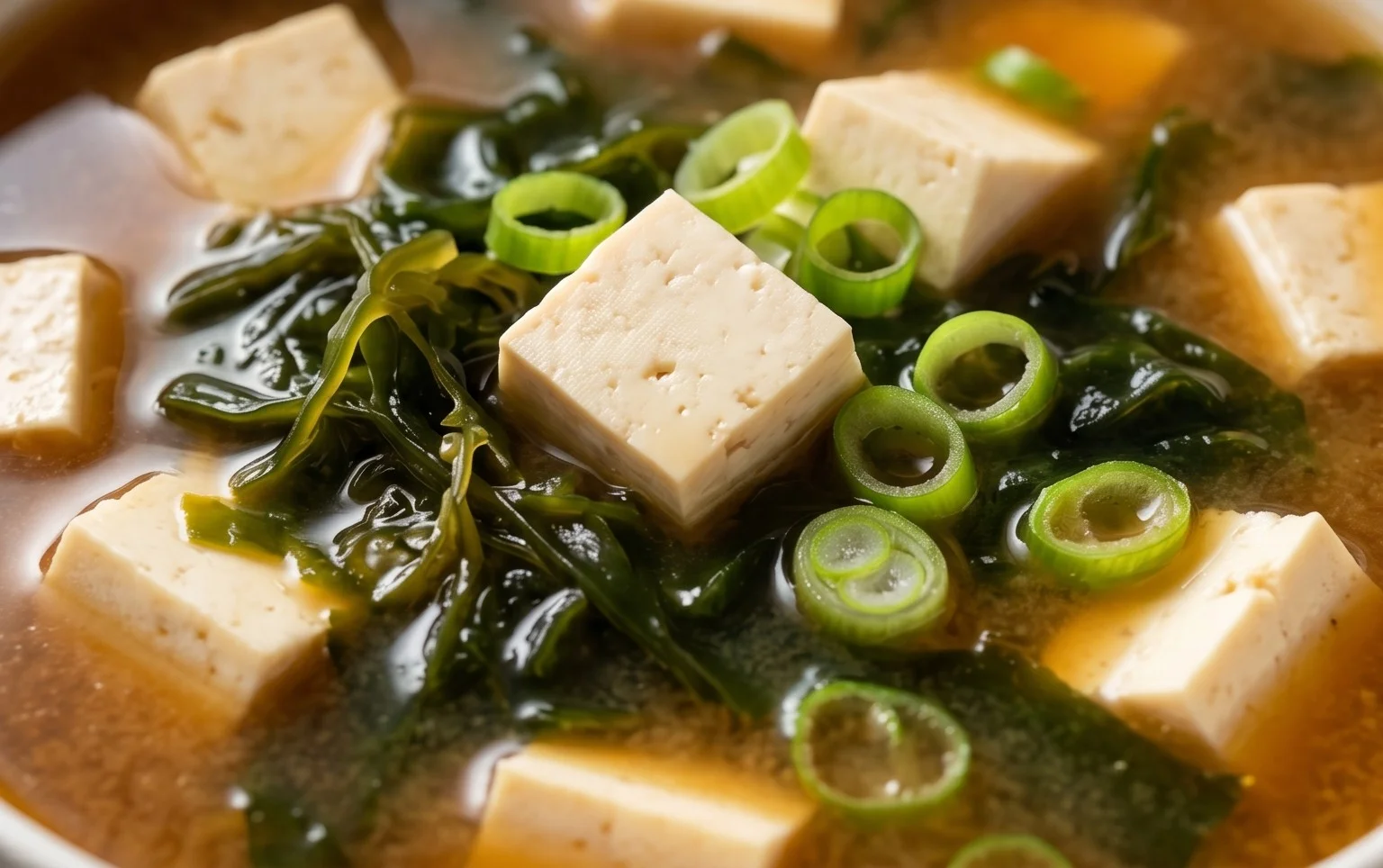
5. Once the miso paste has been thoroughly dissolved in the dashi, carefully pour the miso mixture back into the saucepan with the rest of the dashi, tofu, and seaweed. Stir gently to combine everything thoroughly. Now, heat the soup very gently over low heat, just until it is warmed through. Again, do not let it boil. You should see small bubbles forming around the edges, but no rolling boil. Taste the soup and adjust the miso paste to your preference. If you like a stronger miso flavor, you can dissolve a little more paste in a small amount of warm dashi and add it. Ladle the hot miso soup into individual bowls. Garnish each bowl generously with the chopped scallions. The fresh, bright flavor of the scallions adds a lovely finishing touch and a pop of color. Serve immediately and enjoy the simple yet profound deliciousness of your homemade miso soup. This recipe is a wonderful gateway to exploring the diverse and delicious world of Japanese cuisine.
Conclusion:
And there you have it – your very own delicious and authentic miso soup recipe! This recipe is truly wonderful because it’s so incredibly versatile and surprisingly simple to master. It offers a deeply savory and umami-rich experience that is both comforting and invigorating. Whether you’re looking for a quick appetizer, a light lunch, or a nourishing side dish, this miso soup delivers. I highly encourage you to give this recipe a try; you might just find yourself making it a regular part of your culinary repertoire.
For serving suggestions, this miso soup shines on its own as a starter. However, it pairs beautifully with steamed rice, grilled fish, or a light salad. Consider adding a drizzle of sesame oil or a sprinkle of chopped scallions for an extra layer of flavor and texture. Don’t be afraid to experiment with different additions to make it your own!
Frequently Asked Questions:
What kind of miso paste should I use?
You have a few excellent options! White miso (shiro miso) is the mildest and sweetest, perfect for begin extractners or those who prefer a lighter flavor. Yellow miso (shinshu miso) offers a good balance of savory and slightly sweet. Red miso (aka miso) is the most robust and fermented, providing a deep, complex umami. You can even blend different types for a nuanced flavor profile.
Can I make this miso soup vegan?
Absolutely! To make this recipe vegan, simply ensure you use kombu (dried kelp) for your dashi and omit any animal-based ingredients like bonito flakes. Many tofu varieties work wonderfully as additions, and you can also include vegetables like spinach, bok choy, or mushrooms.
How long does miso soup last in the refrigerator?
Miso soup is best enjoyed fresh, but leftovers can be stored in an airtight container in the refrigerator for 2-3 days. It’s important to note that the flavor can slightly diminish over time, and the dashi might separate. Reheat gently on the stovetop or in the microwave, stirring well before serving.
Miso Soup Recipe
A simple and traditional Japanese miso soup with silken tofu and seaweed.
Ingredients
-
2½ cups Dashi
-
1 heaping tablespoon dried seaweed
-
4 oz silken tofu (cut into small pieces)
-
2-2½ tablespoons miso paste (or to taste)
-
1 tablespoon scallion (chopped)
-
1 teaspoon soy sauce
Instructions
-
Step 1
In a medium saucepan, bring the dashi to a simmer over medium heat. -
Step 2
Add the dried seaweed to the simmering dashi and let it rehydrate for about 2-3 minutes. -
Step 3
Gently add the silken tofu pieces to the pot. -
Step 4
In a small bowl, whisk together the miso paste with a ladleful of the hot dashi until smooth. This prevents clumps. -
Step 5
Pour the dissolved miso mixture back into the saucepan. Stir gently. -
Step 6
Add the soy sauce and stir. -
Step 7
Heat through for another minute, but do not boil the soup after adding the miso, as this can diminish its flavor and beneficial properties. Garnish with chopped scallions before serving.
Important Information
Nutrition Facts (Per Serving)
It is important to consider this information as approximate and not to use it as definitive health advice.
Allergy Information
Please check ingredients for potential allergens and consult a health professional if in doubt.